
Clothes shouldn't end where you stop wearing them.
Think about the last shirt you threw out instead of donating. You're not alone — 85% of clothing in the U.S. ends up in the trash, and in California that came to 1.2 million tons of textiles in a single year.
That worn-out sweater isn't just clutter. In a landfill it releases greenhouse gases, wastes the water that grew it, and takes up space the state keeps having to find. It costs money, too: $99 million a year in landfill fees alone.
SB 707, California's Responsible Textile Recovery Act, is the first law of its kind in the country. Instead of leaving textile waste to consumers and cities, it puts responsibility on the companies that make our clothes — requiring them to help fund and build a system where textiles are reused, repaired, or recycled rather than dumped.
Producers registered with the state's producer responsibility organization in 2026. Over the next few years, that system gets designed and built. Here's what it could mean where you live.
Diverting just a quarter of discarded textiles could cut carbon emissions by as much as taking hundreds of thousands of cars off the road.
Every ton of clothing reused saves nearly two million gallons that would otherwise go into growing new cotton.
Thousands of them, across the state — collection, sorting centers, repair shops.
Expect more drop-off bins, kiosks, and take-back programs closer to home.
This isn't theoretical. France launched a comparable program in 2009, and today it keeps nearly a quarter of all discarded textiles out of landfills every year.
But a law only works if the infrastructure exists to carry it. More collection points, smarter local policy, and real partnership between cities, collectors, and communities — all of it has to come together. That's the work we've been doing in California for twenty years, and it's the work SB 707 could finally bring to scale.
Reuse at this scale isn't waste disposal dressed up as charity. It's a functioning economy, and it employs people who depend on it.
Americans throw out roughly 17 million tons of textiles a year. Two thirds are buried, another fifth burned, and under 15% is recovered at all. What does get collected is mostly exported, because that is where demand for secondhand clothing is strongest — only about a fifth is sold here at home.
And once it arrives? A 2025 study of secondhand clothing imports from the United States to Guatemala looked closely at that question.
That's the part missing from most conversations about clothing exports.
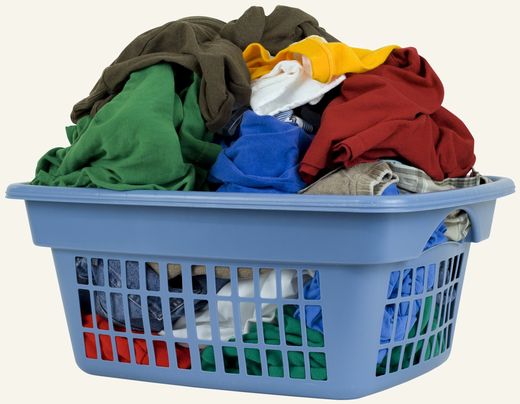
A bag you were going to clear out anyway
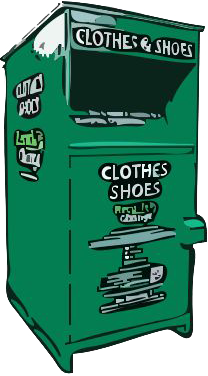
From a box near you, emptied as often as it needs to be
Baled at our Richmond facility and prepared for market
Into the secondhand market — about 20% U.S., 80% export
By buyers in the destination market, by type and condition
At one Guatemalan retailer, 91.6% of imported clothing was reused
We collect, bale, and sell into that same market. Two things set us apart, and neither is the route the clothes take.
First, we own and operate every box ourselves rather than contracting it out — and the name on the box is our own, not one licensed from another charity. Second, we are a nonprofit, so the money the material earns funds development work instead of shareholders.
Net proceeds fund the training of volunteers doing community-based development work.
Everything above points to the same conclusion: reuse works at scale. It's not a feel-good gesture. It's infrastructure, and it's already carrying an enormous load.
But it's fragile in ways that aren't obvious. Local sorting and resale are what generate both the environmental benefit and the jobs — move that work upstream and you lose both. Even low-value textiles matter, because keeping them in circulation is what keeps them out of the ground.
And well-intentioned policy can break it. Rules like mandatory pre-sorting before export sound responsible on paper while dismantling the local value chains that make reuse viable in the first place. Getting circularity right means holding three goals at once — and refusing to sacrifice any of them for the others.
A garment worn again is one that never had to be made, and one that never rots in a landfill releasing methane. Even low-value textiles stay in use instead of becoming emissions.
Reuse only matters if it changes lives. Proceeds from the clothing we collect train volunteers who work alongside communities on food security, health, education, and clean water.
The secondhand trade is not a charity pipeline — it is an economy. Sorters, drivers, warehouse staff, and traders all depend on it, here in Northern California and in the markets that receive what we collect.
That's the standard we'd like to see SB 707 held to. And it's the standard we hold ourselves to.
Circularity is not just a question of materials. It is a question of who the system is built to serve.
Every garment you keep out of a landfill is one more piece of a cleaner, stronger future.